

[free_download_btn]
Over the past decade, the Premier League has seen significant shifts in dominance, consistency, and performance among its top clubs. In this analysis, I explored data from 2012/13 to 2024/25 across five major teams (Arsenal, Manchester City, Manchester United, Liverpool, and Tottenham) to uncover patterns that explain success and decline.
The dataset used for this analysis was sourced from Kaggle, and the entire analysis was conducted using Microsoft Excel. To enhance the insights, I leveraged advanced Excel formulas and used linked images to dynamically display KPIs, creating a more interactive and visually engaging analysis.
Manchester City
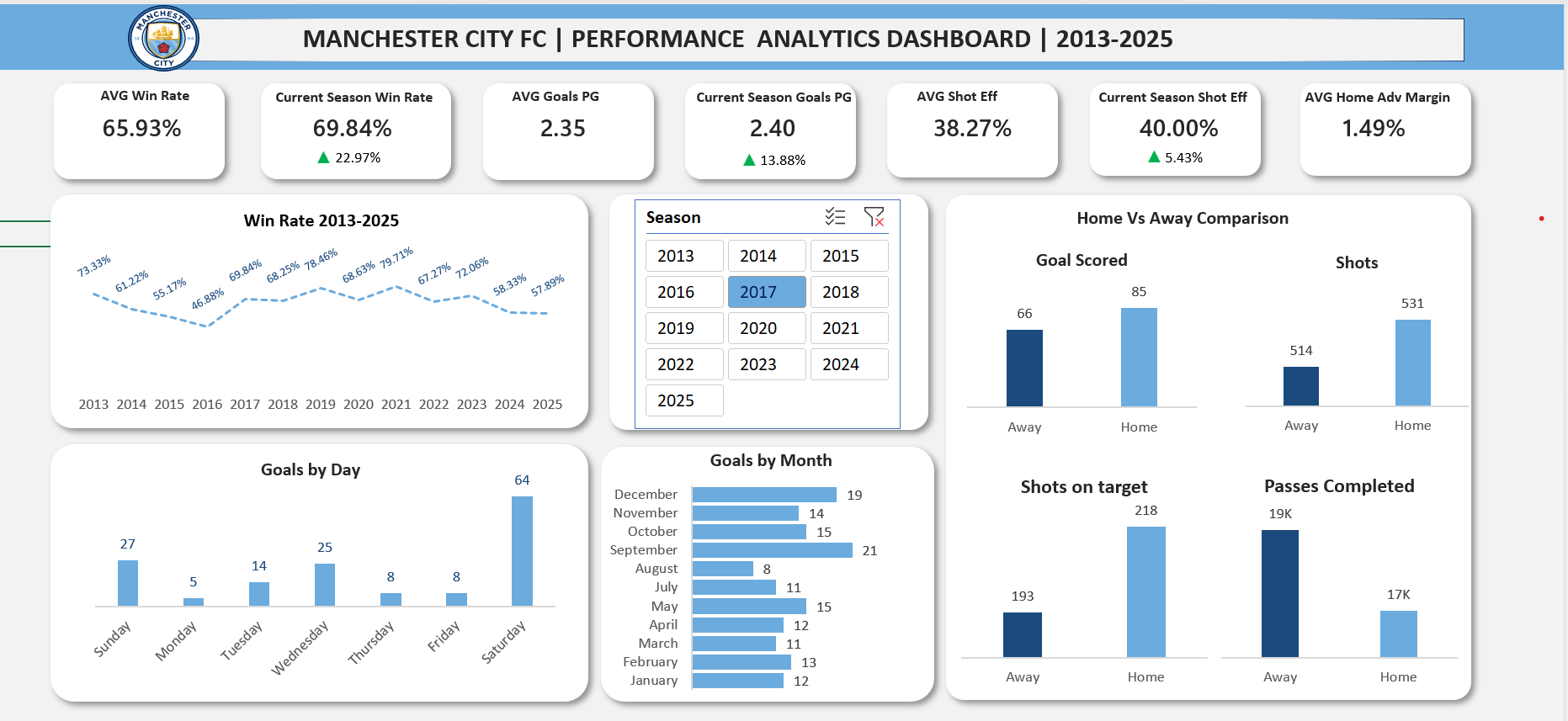
Manchester City emerge as the most dominant club across the dataset, with an average win rate of over 66%. Their peak season nearly 80%-win rate in 2020/21 highlights their superiority during their prime years.
What sets City apart is not just peak performance, but sustained consistency. From 2017 onwards, they maintained elite win rates across multiple seasons, establishing themselves as the benchmark in modern football.
However, recent seasons show a slight dip into the high-50% range. While still competitive, this could indicate the beginning of a transition phase.
Liverpool
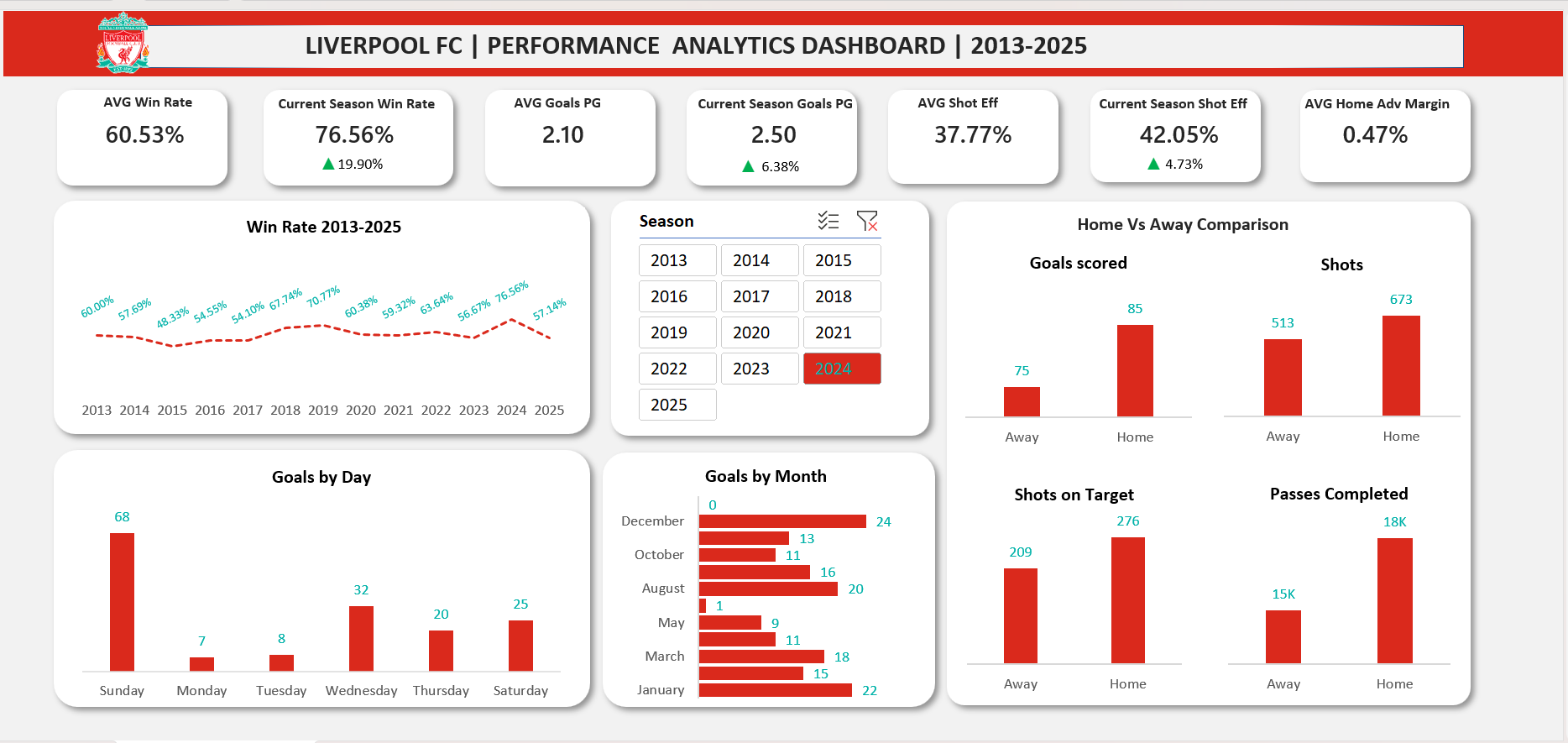
Liverpool’s trajectory is the most impressive in the dataset.
Starting from moderate performance levels, they steadily improved to reach a peak win rate of over 76% in 2024. This reflects strong long-term planning, effective recruitment, and tactical consistency.
Liverpool stands out as the only club with a clear upward trend, making them the most structurally improved team in this analysis.
Manchester United
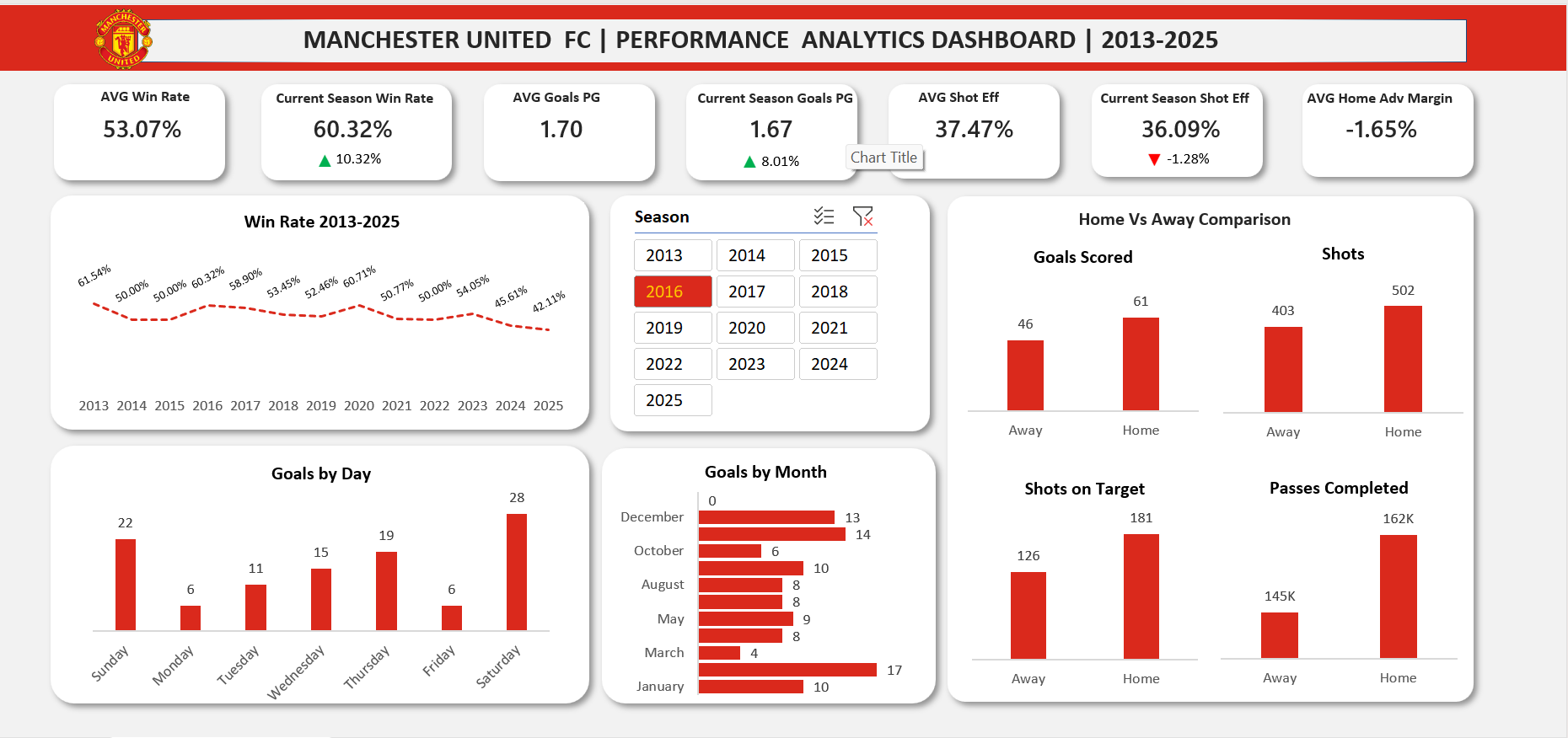
Manchester United’s performance tells a very different story.
From a strong position in 2013, with a win rate above 60%, the club has steadily declined. By 2025, their win rate dropped to just over 42%, the lowest recorded among all clubs in the dataset.
This pattern suggests a structural issue rather than a temporary slump, highlighting the need for a long-term rebuild.
Arsenal
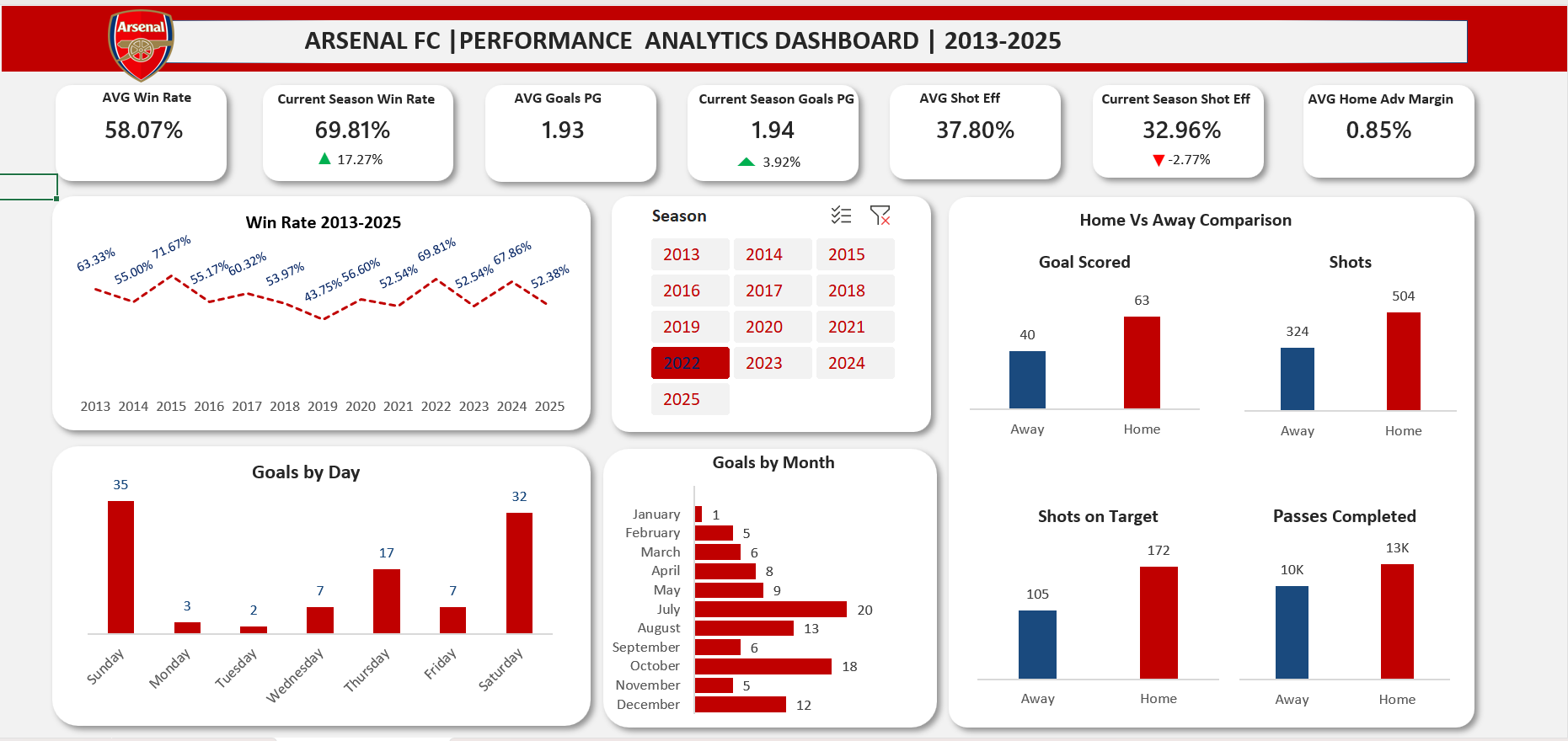
Arsenal’s data reflects a pattern of inconsistency.
They have achieved strong performances in certain seasons, particularly in 2015, 2022, and 2024. However, these peaks are often followed by noticeable declines.
This alternating pattern indicates that while Arsenal has the potential to compete at the highest level, maintaining consistency remains a challenge.
Tottenham
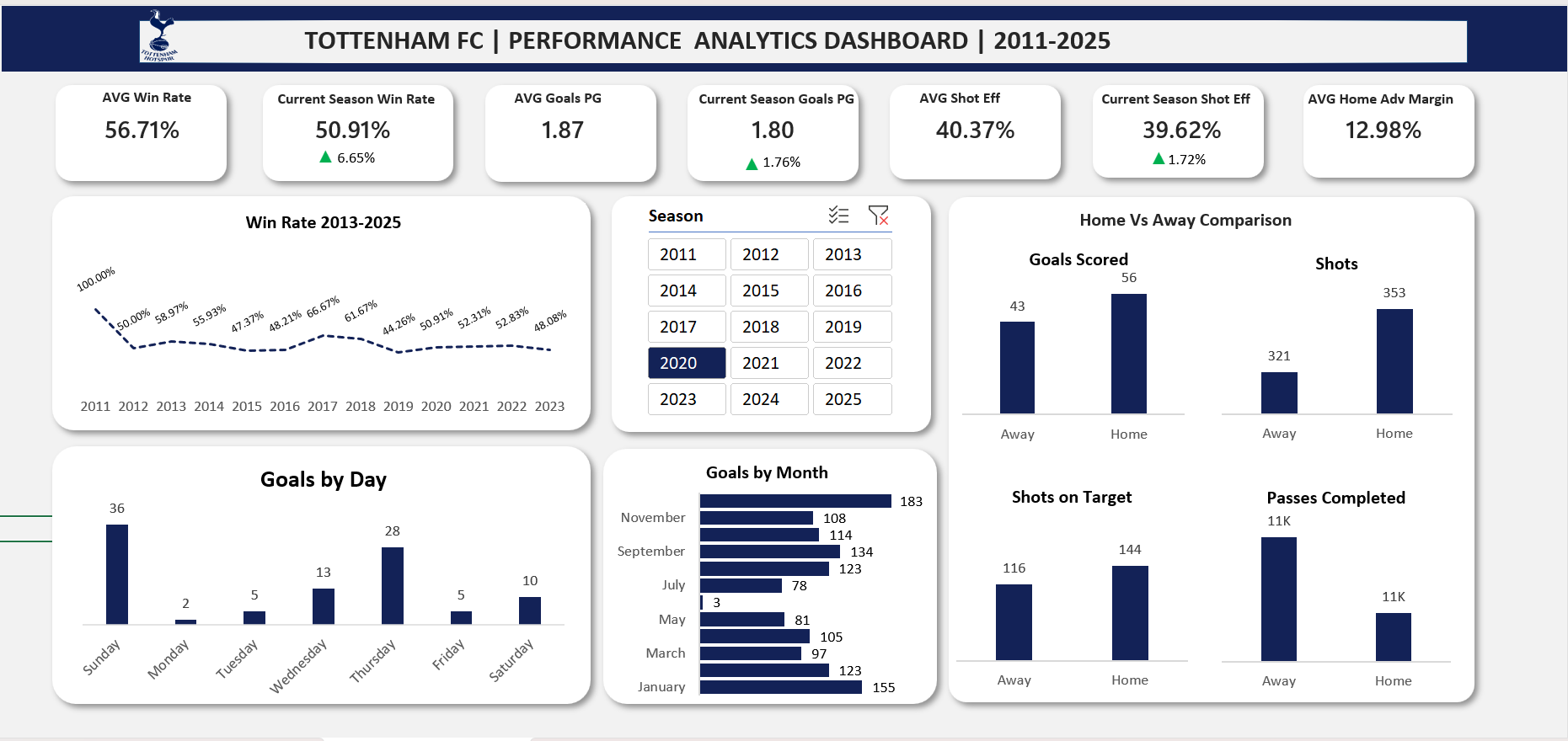
Tottenham’s performance is defined by a brief peak period.
Their best seasons occurred between 2017 and 2018, after which performance declined significantly. Recent seasons show win rates below 50%, suggesting that their success during that period was not sustained.
Home vs Away
One of the most consistent findings is the importance of home advantage.
All clubs score more goals at home than away except Tottenham, which shows an unusual trend of scoring more away goals. This anomaly may be linked to tactical approaches or external factors such as stadium changes.
For most teams, strong home performance remains a critical success factor.
Seasonal Trends in Performance
The data also reveals patterns across the calendar year:
- December records the highest number of goals due to fixture congestion
- March often shows reduced performance, likely due to international breaks
- Saturday matches produce the highest number of goals across all clubs
These trends highlight how scheduling impacts team performance.
Methodology: Tools and Approach
This analysis was conducted entirely in Microsoft Excel, showcasing how powerful Excel can be for data analysis when used effectively.
Key techniques used include:
- Advanced formulas for calculating win rates and aggregations
- Structured data tables for season-by-season comparisons
- Linked images to create dynamic KPI displays
- Data organization for multi-dimensional analysis (season, venue, time)
This approach demonstrates that even without advanced BI tools, Excel can deliver insightful and professional-level analytics.
Key Takeaways
- Manchester City dominate in both consistency and performance
- Liverpool shows the strongest long-term improvement
- Manchester United’s decline is structural
- Arsenal has the potential but lack consistency
- Tottenham’s peak performance was not sustained
Conclusion
This analysis reinforces an important principle: success whether in football or business is driven by consistency and structure over time.
Using Excel and publicly available data, it’s possible to uncover powerful insights that go beyond surface-level observations. For analysts, this highlights the importance of combining the right tools with the right approach to generate meaningful insights.
- Version
- Download 5
- File Size 4.32 MB
- File Count 0
- Create Date March 30, 2026
- Last Updated April 14, 2026