
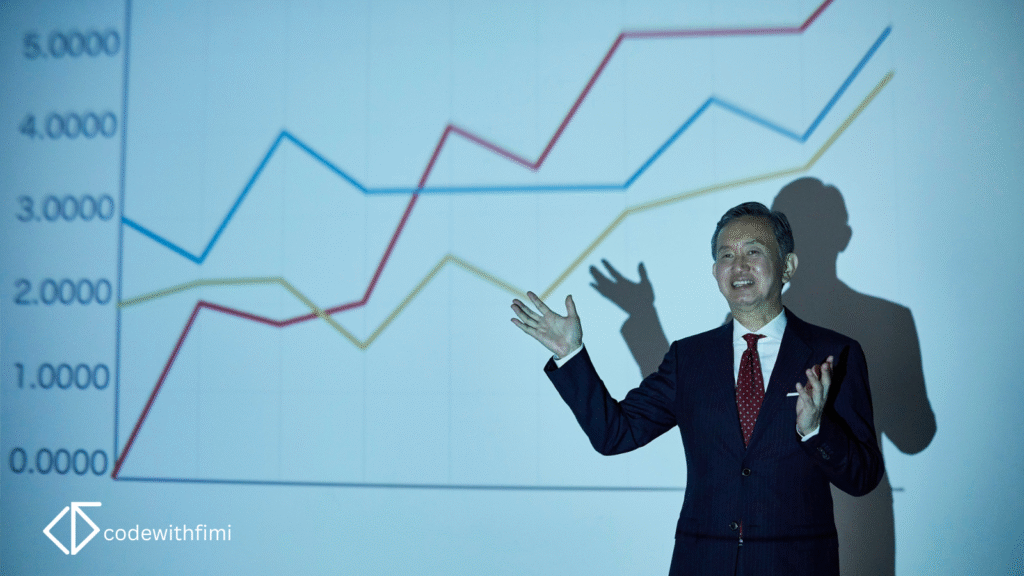
Data visualization is not just about making charts look attractive. It’s about helping the human brain understand information quickly and accurately. The best dashboards and reports are designed with psychology in mind — how people perceive patterns, colors, shapes, and comparisons.
If you want to become a better data analyst, understanding the psychological foundations behind visualization will instantly improve your dashboards in tools like Excel, Power BI, or Tableau.
Here are 7 data visualization principles backed by psychology that will elevate your work.
1. Leverage Pre-Attentive Processing
Pre-attentive attributes are visual properties the brain processes in milliseconds before conscious thought. These include:
- Color
- Size
- Orientation
- Position
- Shape
For example, if one bar in a chart is colored red while others are gray, the red bar immediately stands out. This is powerful when highlighting KPIs or outliers.
Tip: Use contrast intentionally. Don’t highlight everything, only highlight what matters.
2. Respect Cognitive Load Limits
Human working memory is limited. According to research by George A. Miller, people can hold about 7 (plus or minus 2) items in short-term memory.
If your dashboard shows 15 KPIs at once, users will struggle to focus.
Tip:
- Limit visible metrics
- Group related information
- Break dashboards into sections
Less clutter means more clarity.
3. Use Gestalt Principles of Perception
The Gestalt principles explain how humans group visual elements. Key ones include:
- Proximity – Objects close together are seen as related.
- Similarity – Items with similar colors or shapes are grouped mentally.
- Continuity – The eye follows smooth paths and lines.
For example, grouping revenue and profit metrics close together signals they’re related.
Tip: Align and space elements intentionally, layout communicates meaning.
4. Choose Colors with Meaning
Colors trigger emotional and cognitive responses:
- Red → urgency, loss, danger
- Green → growth, success
- Blue → trust, stability
But color also impacts readability. Around 8% of men experience color vision deficiency, so red-green combinations can be problematic.
Tip:
- Avoid relying only on color
- Use labels and patterns
- Keep color usage consistent
Color should support meaning and not create confusion.
5. Make Comparisons Easy
The human brain is wired for comparison. According to research popularized by Stephen Few, position along a common scale is the easiest visual comparison for the brain to interpret.
That’s why bar charts and line charts are so effective.
Harder to compare:
- Pie charts
- 3D charts
- Area distortions
Tip: When in doubt, use a simple bar or line chart.
6. Reduce Chartjunk
The term “chartjunk” was popularized by Edward Tufte. It refers to unnecessary visual elements that distract from the data.
Examples:
- Excess gridlines
- 3D effects
- Decorative backgrounds
- Loud color palettes
These elements increase cognitive load and reduce clarity.
Tip: If a visual element doesn’t add insight, remove it.
7. Tell a Visual Story
Humans understand stories better than raw numbers. A good dashboard guides the viewer:
- What is happening?
- Why is it happening?
- What should we do?
Instead of dumping metrics, structure your visuals in a logical flow:
- Overview KPI
- Trend analysis
- Breakdown by category
- Action insight
Your dashboard should answer questions before they’re asked.
Why These Principles Matter for Analysts
When you apply psychology to data visualization:
- Stakeholders understand insights faster
- Decision-making improves
- Your dashboards feel professional
- You build credibility as a strategic analyst
Data visualization is not decoration, it’s communication.
If you master these principles, your reports in Excel, Power BI, or Tableau will immediately stand out.
FAQs
What are data visualization principles?
Data visualization principles are guidelines that help present data clearly and effectively based on how humans process visual information.
Why is psychology important in data visualization?
Because dashboards are designed for human brains. Understanding perception, attention, and memory helps create visuals that are easier to interpret.
What is chartjunk?
Chartjunk refers to unnecessary decorative elements in charts that distract from the data and reduce clarity.
What is the most effective chart type?
Bar charts and line charts are generally the most effective because humans compare position along a common scale easily.
How can I improve my dashboards immediately?
Start by reducing clutter, limiting colors, highlighting key metrics, and choosing simple chart types.